 Part I
The Bottom of the Stack
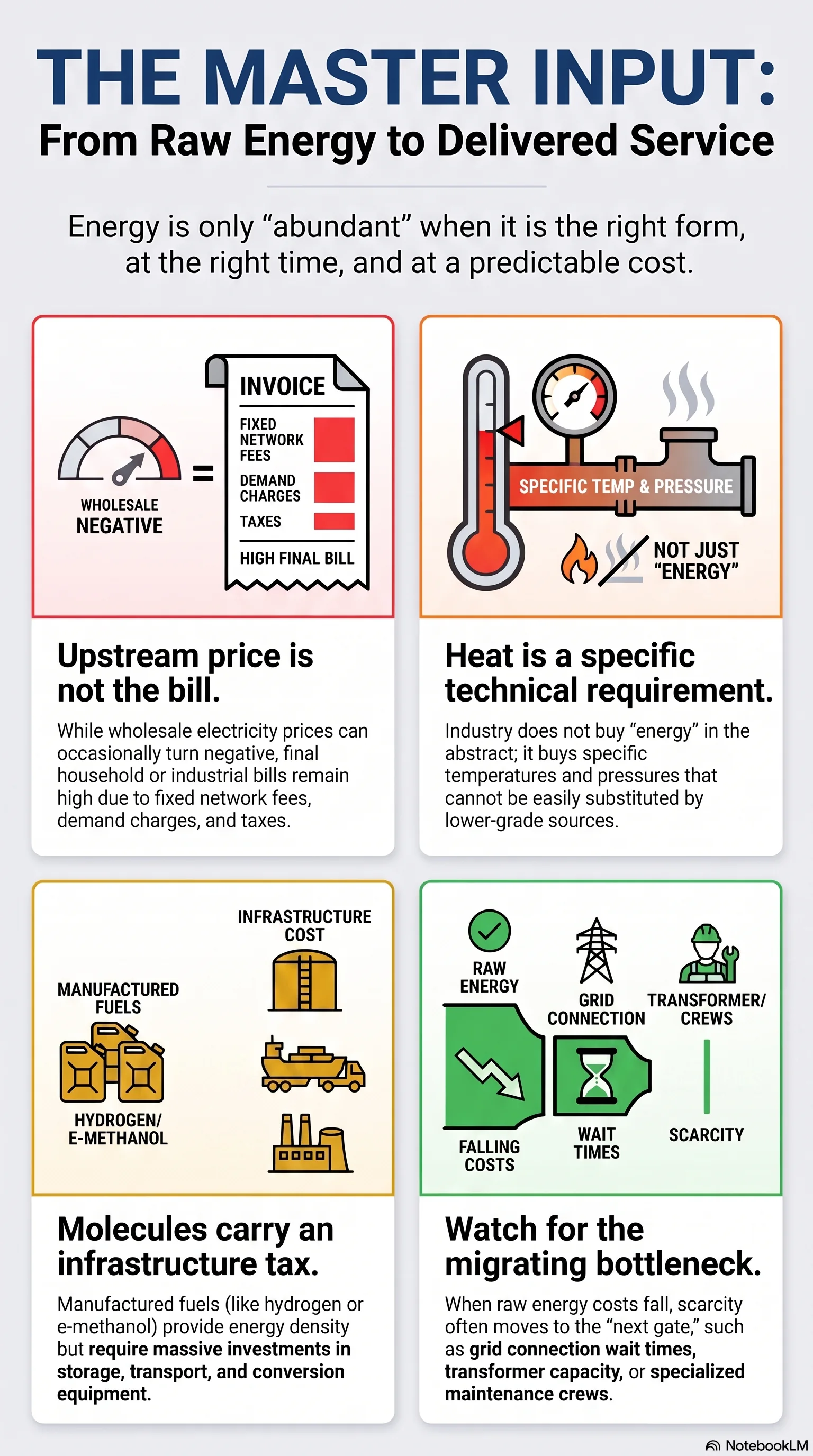
Energy abundance is never generic. It arrives as a particular service, at a particular place and time, with delivery costs attached.
A systems-level journey through the industrial breakthroughs that could reshape energy, matter, machines, infrastructure—and the texture of ordinary life.
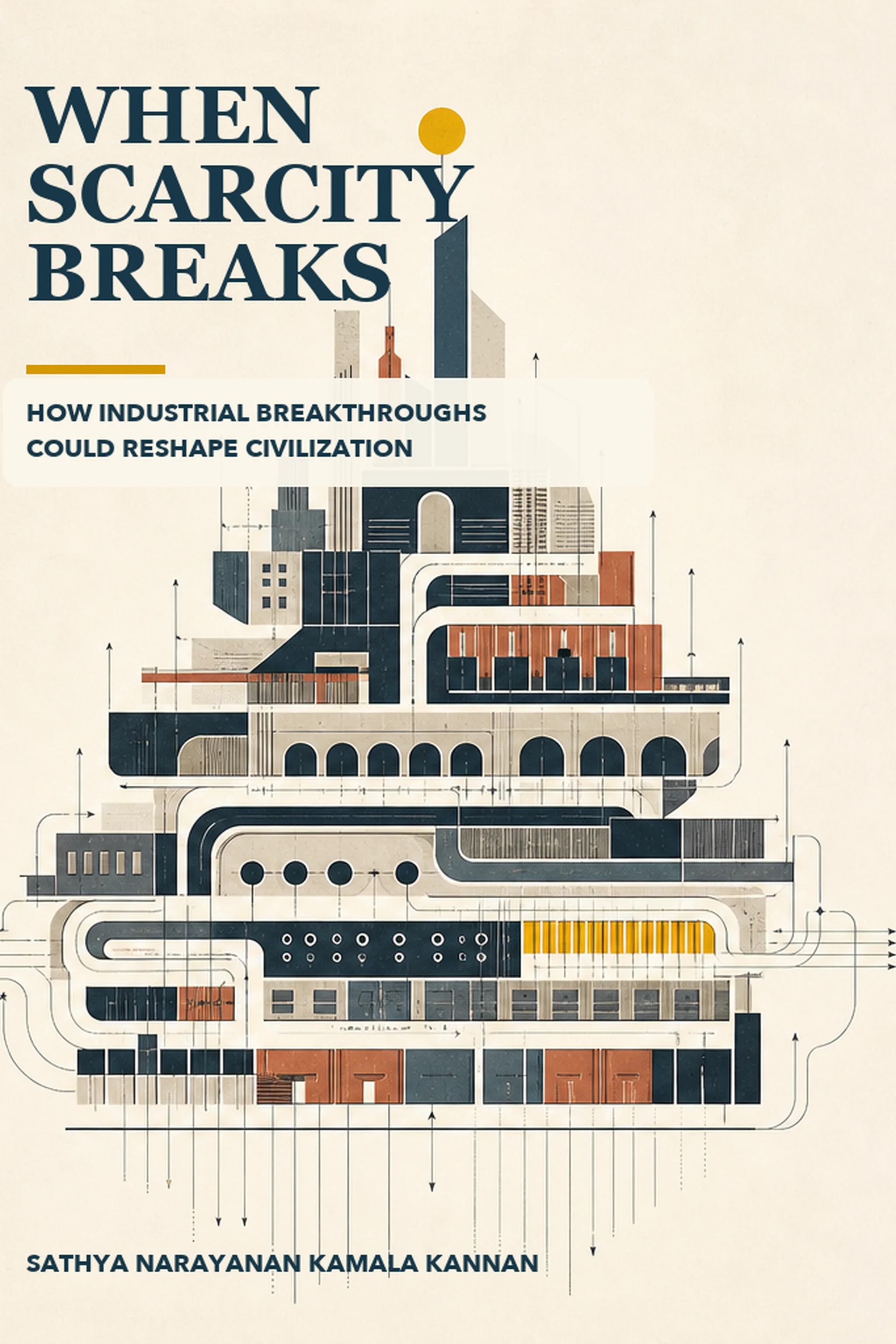
Written bySathya Narayanan Kamala Kannan
Civilization is not a collection of technologies. It is an interdependent production stack.
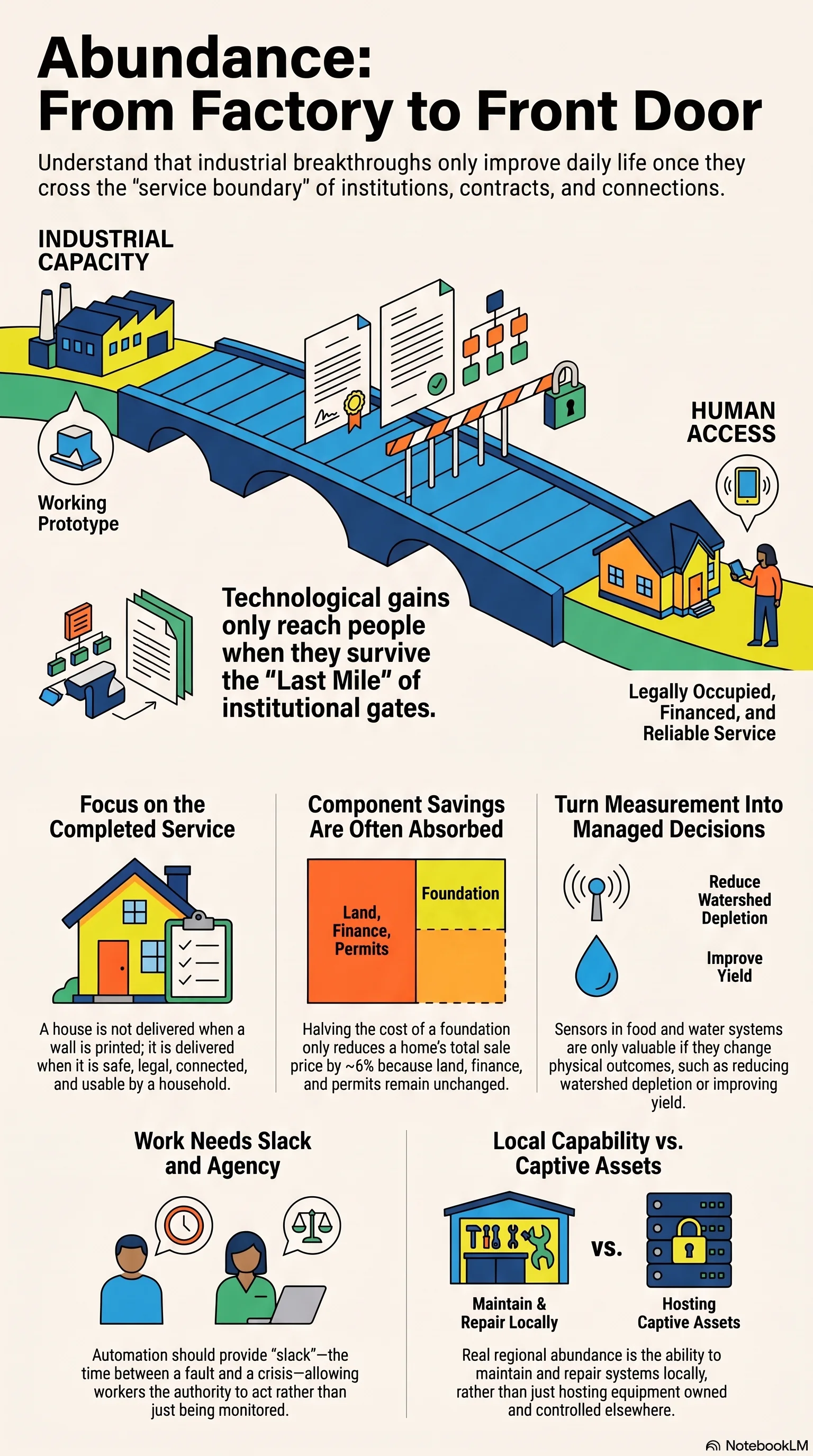
A breakthrough matters only when reliability, economics, infrastructure, institutions, integration, and distribution let it propagate.
The book moves upward from foundational inputs to human outcomes, then turns toward power, ownership, and the constraints that replace the old ones.
Part IEnergy abundance is never generic. It arrives as a particular service, at a particular place and time, with delivery costs attached.
 Part II
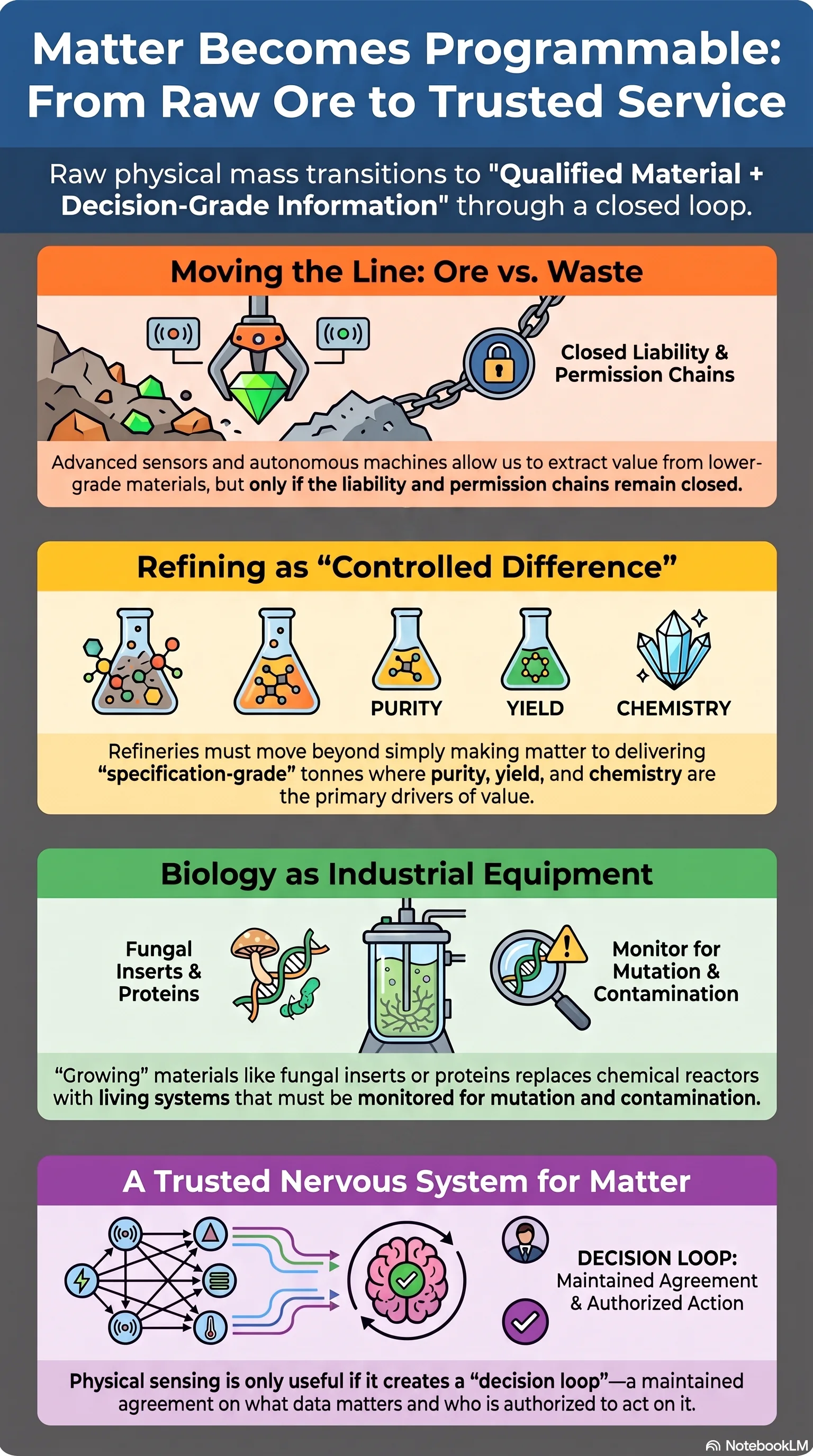
More resources matter only when they can be separated, purified, observed, and turned into dependable industrial inputs.
 Part III
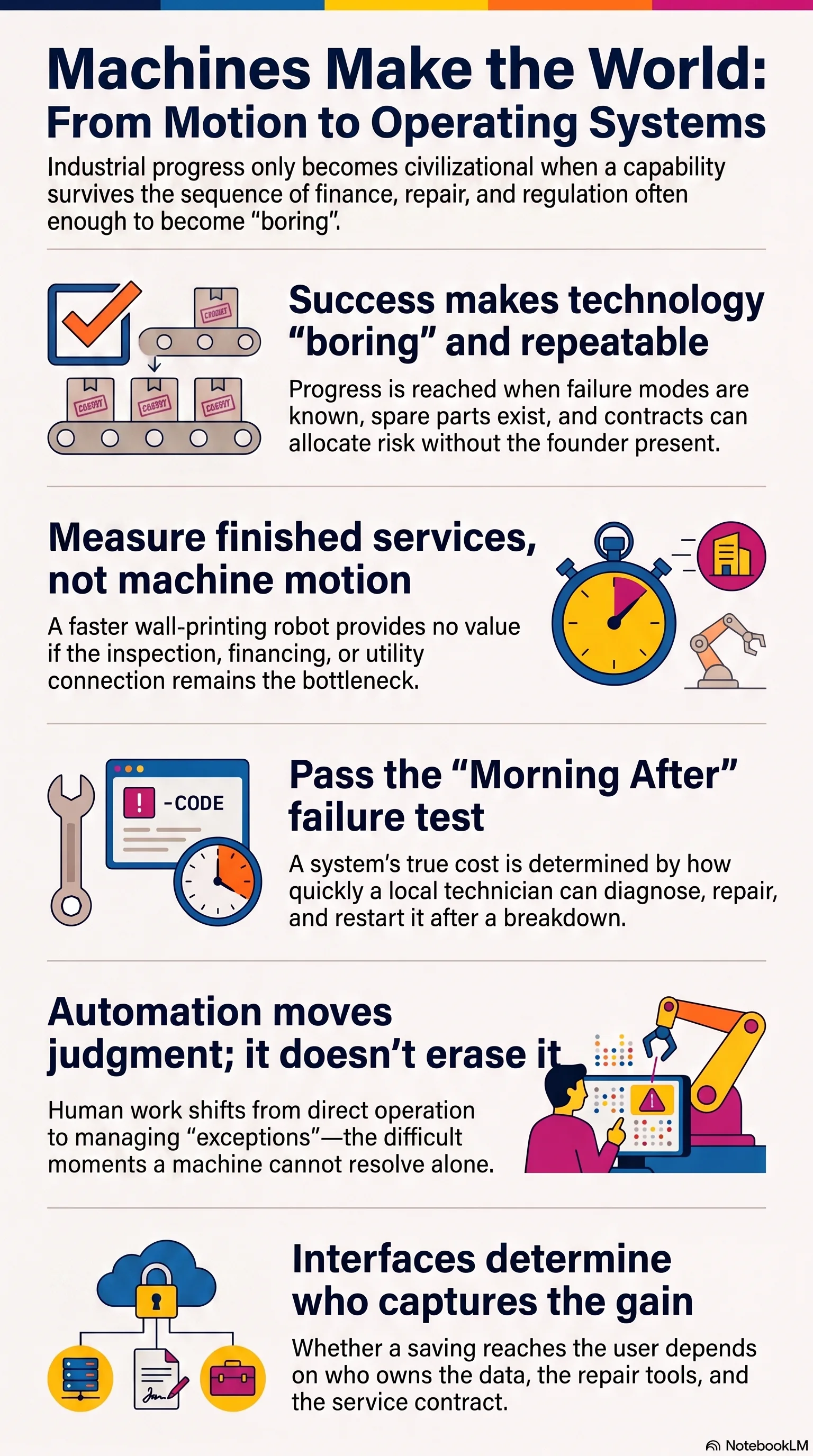
Specifications do not transform industry. Reliable fleets, qualified output, maintenance, coordination, and service networks do.
 Part IV
A lower production cost becomes human abundance only after land, finance, rules, access, and bargaining power have their say.
 Part V
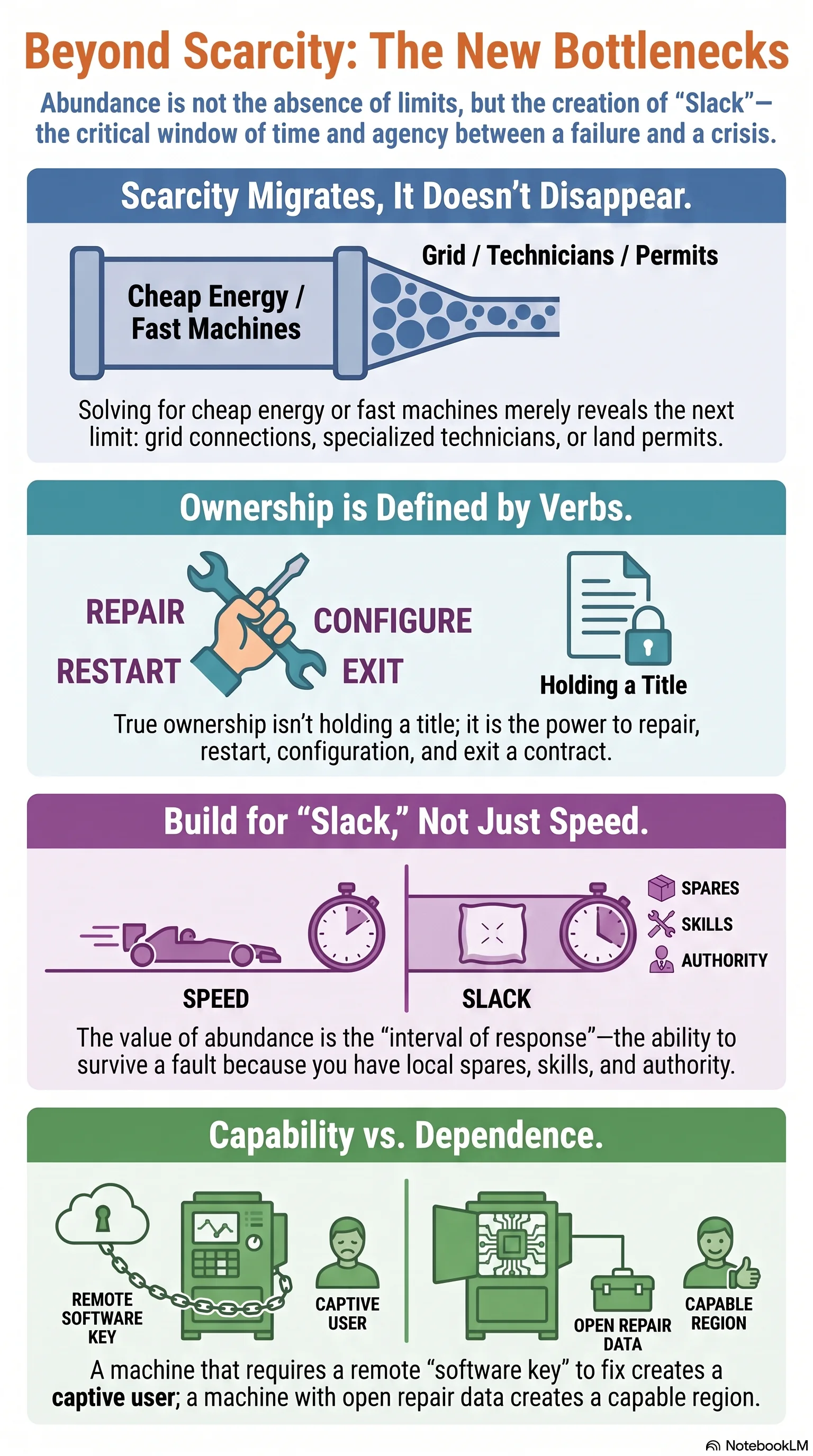
When one constraint loosens, value and power migrate toward the next bottleneck: connection, permission, maintenance, trust, or control.
Select a layer to reveal the chapters that touch it. The deeper question is always the same: does a technical gain survive every handoff above it?
A home, a meal, a machine, or a hospital is the visible end of a long chain: energy becomes usable matter; matter enters machines; machines become networks; networks become services; institutions decide who can build, connect, repair, own, and benefit.
Measure what reaches the user, not merely what leaves the machine.
Every loosened bottleneck makes another input, rule, or capability more valuable.
A lower cost curve matters only through time, security, affordability, and agency.
Search the whole book, filter by stack layer or part, then open any chapter to trace its argument, technologies, company cases, constraints, and evidence posture.
What changed technically—and under what conditions?
Can it repeat through ordinary variation and failure?
Does the fully delivered service beat the alternative?
Can it be financed, connected, insured, and legally used?
Which suppliers, incumbents, and downstream systems reorganize?
Who gains time, security, affordability, or control?
“Abundance” here does not mean zero price or infinite supply. It means a binding constraint loosens enough to reorganize behavior—after delivery, institutions, ownership, and distribution are counted.
This experience is a reader-facing map of the published book. Its evidence base is current through July 25, 2026. Company names appear as case studies and boundary tests—not recommendations, endorsements, or claims of future success.